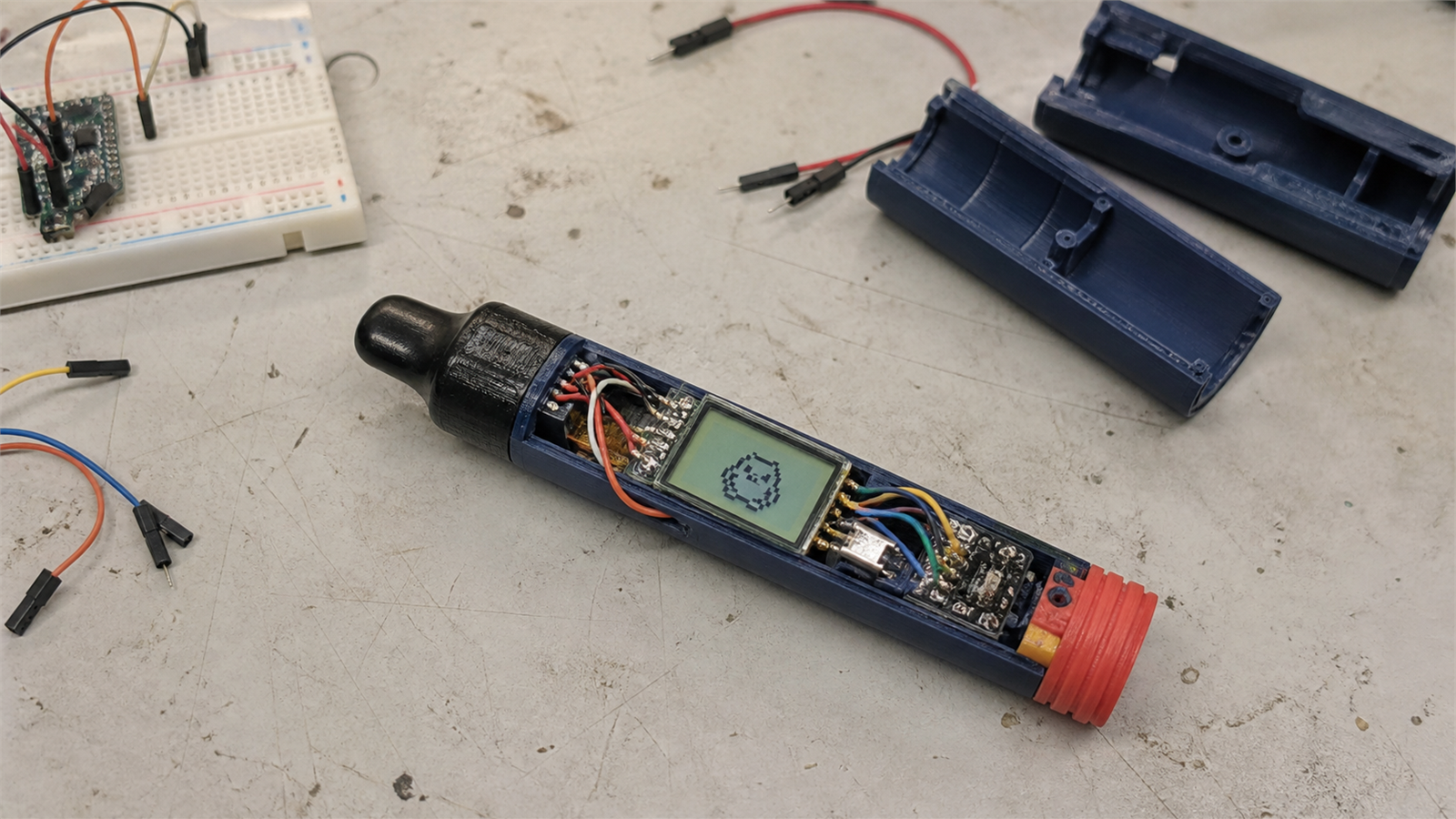
In 2017, two graduate students gave a virtual pet a nicotine problem. The creature lived on a tiny screen wired to an e-cigarette at NYU’s ITP/IMA Stupid Hackathon, an event built for ideas that are deliberately absurd. Its name was Vape-o-Gotchi.
The joke now reads like a product forecast. Commercial smart vapes have arrived with color displays, games, animations, Bluetooth, and puff-linked rewards. The student project did not create that market. It did, however, expose the loop before the loop became easy to buy.
A tiny pet with a terrible appetite
Vape-o-Gotchi began with a Tamagotchi-like character and a question: what if the device people repeatedly checked could check them back? Creators Rebecca Xun and Lucia Camacho connected a small virtual-pet display to a vape during the Stupid Hackathon, hosted by NYU’s Interactive Telecommunications Program and Interactive Media Arts community.
The distinction around that origin matters. Vape-o-Gotchi was a satirical prototype made by students at an NYU-hosted event. It was not an NYU product, not a commercial product, and not a licensed Tamagotchi. The rough casing, exposed electronics, and mischievous premise belonged to a hackathon table, not a retail launch.
A puff became a game input
Most nicotine devices treat inhalation as the end of the interaction. Vape-o-Gotchi treated it as data. A change in the device’s electrical state could be translated into an event for the virtual creature. That simple mapping turned a puff into the equivalent of pressing a game button.
This article is about that incentive design, not how to reproduce the hardware. The important mechanism is conceptual: a sensor notices an action, software changes a character’s condition, and the user receives immediate feedback. Once behavior can move a meter, nurture a pet, or preserve a streak, consumption gains a second reward beyond nicotine.
Good mode came before evil mode
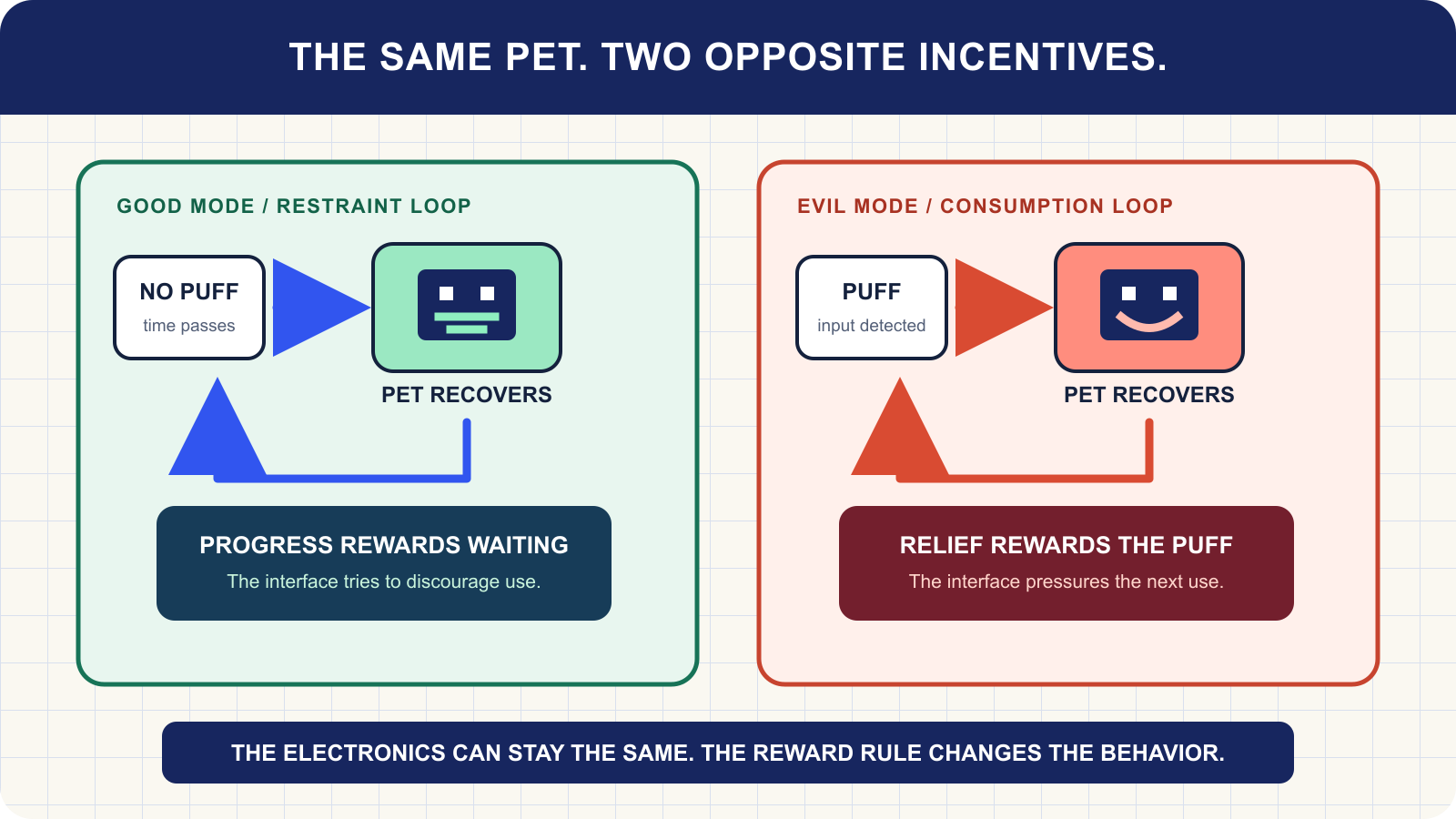
In the creators’ first concept, the pet worsened when the user vaped. Staying away helped it recover. Call that good mode: no puff, a healthier creature, visible progress, and—at least in theory—a reason to discourage the next use. Camacho described the project as an experiment in whether attachment to a needy digital companion might redirect a habit.
Then came the Hackathon’s competitive twist. For evil mode, the incentive flipped. The pet looked sick until the vape was used, so a puff brought it back to life. The reversal made the joke land instantly: identical electronics and artwork could reward restraint or prompt another dose. Neither mode was clinically tested, and the prototype was not a cessation treatment.
The market was already walking the same road
Nearly a decade later, public-health agencies describe disposable smart vapes with touchscreens, games, animations, phone pairing, and virtual pets. Wisconsin’s health department warns that some devices use puffs to feed or maintain on-screen companions. The object that once looked intentionally ridiculous now resembles a recognizable product category.
That resemblance should not be rewritten as a lineage. There is no evidence that commercial manufacturers copied Vape-o-Gotchi or that the student project caused smart vapes to exist. Consumer electronics were already absorbing screens, sensors, streaks, and companion apps. The prototype’s value is diagnostic: it isolates the behavioral idea in an unusually clear form.
A screen changes nicotine’s feedback loop
A conventional disposable vape can already reinforce use through flavor, nicotine delivery, and repetition. A screen adds symbolic stakes. The device can count, congratulate, animate, unlock, or threaten the loss of something the user has tended. Each response shortens the distance between action and reward.
That is more than decoration. A virtual pet invites care; a streak invites preservation; a game invites one more turn. When the input is a puff, the interface can recruit familiar game mechanics into an addictive-product context. It can also make the device look less like tobacco equipment and more like an ordinary gadget carried among phones and earbuds.
The irony is sharpest in good mode. The same feedback system could support reduction by making non-use visible. But a commercial seller earns from consumption, not abstinence. Unless incentives, evidence, and business goals align, the technically possible “helpful” loop can be much less attractive than the loop that keeps the device active.
Now researchers are teaching AI to watch
Researchers are responding to the category’s changing appearance. A peer-reviewed study published online July 9, 2026 trained computer-vision models to identify smart vapes and their screens in social-media images. The reported object detector reached 95% accuracy, while the screen detector reached 92%.
The same paper reported that 37.3% of youth and young adults who had used e-cigarettes in the past 30 days said they had used a smart vape during that period in an early-2025 cohort. That number describes the surveyed group, not every young person. It still suggests that screen-bearing devices are not merely design curiosities.
Vape-o-Gotchi survives as a useful thought experiment because it strips away the polished shell. Put an electronic pet beside a nicotine input and the ethical question becomes visible: what behavior is the creature asking for? Today, the answer is no longer confined to a joke table. It is embedded in interfaces researchers, regulators, parents, and users are learning to recognize.
Primary sources and further reading
- NYU Tisch: ITP/IMA Stupid Hackathon 2026 and event history
- Futurism: interview with Vape-o-Gotchi creators Rebecca Xun and Lucia Camacho
- Nicotine & Tobacco Research: smart-vape detection and prevalence study
- Georgia Tech Research Institute: computer vision for smart-vape monitoring
- Wisconsin Department of Health Services: smart vapes, screens, games, and virtual pets
- U.S. FDA: authorized e-cigarette products and authorization limits